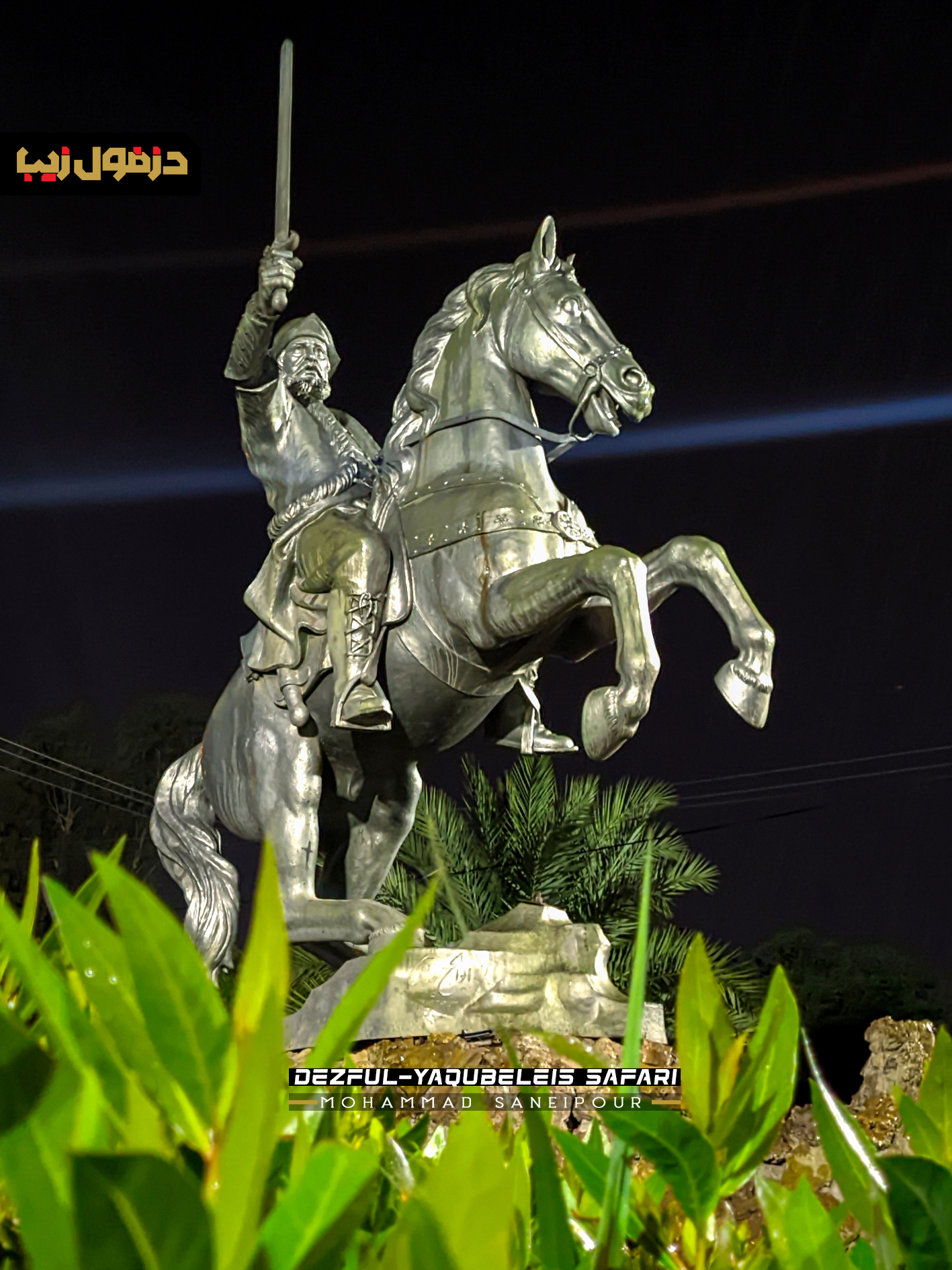
در روزگاری که ابرهای تیره بر آسمان ایران سایه افکنده بود، از سیستان مردی برخاست با ارادهای از جنس صخره و قلبی مملو از عشق به میهن. یعقوب لیث، رادمان پور ماهک، عیاری بود که از سفره ساده نان و نمک به تخت پادشاهی رسید. مجسمه او تنها یک پیکره سنگی نیست؛ بلکه یادآوریِ صلابت مردی است که به ما آموخت برای حفظ عزت میهن و زبان مادری، باید تا پای جان ایستاد.
. شناسنامه مجسمه یعقوب لیث صفاری
سازنده: ابوالحسن خان صدیقی (ملقب به نیمای پیکرهتراشی ایران و از شاگردان برجسته کمالالملک)
سال ساخت: ساخت این اثر در سال ۱۳۵۳ خورشیدی به سفارش انجمن آثار ملی انجام شد.
محل ساخت: استاد صدیقی این مجسمه را در ایتالیا (کارگاه شخصیاش در فلورانس) طراحی کرد و ریخته گری برنزی آن نیز در همانجا انجام شد و سپس به ایران منتقل شد.
محل نصب: این مجسمه در ورودی شهر دزفول (نزدیک به آرامگاه یعقوب لیث در روستای اسلامآباد یا همان جندیشاپور قدیم) نصب شده است.
ویژگی خاص: این اثر یکی از معدود مجسمههایی است که یعقوب لیث را سوار بر اسب نشان میدهد و ابهت عیاری و جنگاوری او را به خوبی منتقل میکند.
To Preserve the Honor of Our Homeland and Our Mother Tongue, We Must Stand Firm Until Our Last Breath
In an era when dark clouds had gathered over the skies of Iran, a man rose from Sistan with a will as strong as stone and a heart filled with love for his homeland.
Ya’qub ibn al-Layth al-Saffar, also known as Radman Pour Mahak, was a man of humble origins who rose from a simple life as a coppersmith and commoner to become a powerful ruler. His journey from modest beginnings to the throne is a remarkable testament to courage, determination, and patriotism.
His statue is far more than a bronze monument. It is a lasting symbol of the strength, courage, and determination of a man who taught us that the honor of our homeland and the preservation of our mother tongue are worth fighting for, even at the cost of our lives.
The Story Behind the Statue of Ya’qub al-Saffar
– Sculptor: Abolhassan Khan Sedighi, widely regarded as one of Iran’s greatest sculptors and a distinguished student of Kamal-ol-Molk.
– Year of Creation: The statue was commissioned by the National Monuments Association of Iran and created in 1974 (1353 in the Iranian calendar).
– Place of Creation: Master Sedighi designed the statue in Italy, at his personal studio in Florence. The bronze casting was also completed there before the statue was transported to Iran.
– Location: The statue stands at the entrance to the city of Dezful, near the tomb of Ya’qub al-Saffar in the village of Eslamabad, close to the historic site of ancient Jundishapur.
– Distinctive Feature: This remarkable monument depicts Ya’qub al-Saffar riding a horse, capturing his commanding presence, bravery, and warrior spirit.
Ya’qub al-Saffar remains a powerful symbol of Iranian pride, independence, and cultural identity—a man whose legacy reminds us that a nation’s language, dignity, and heritage must never be forgotten.