
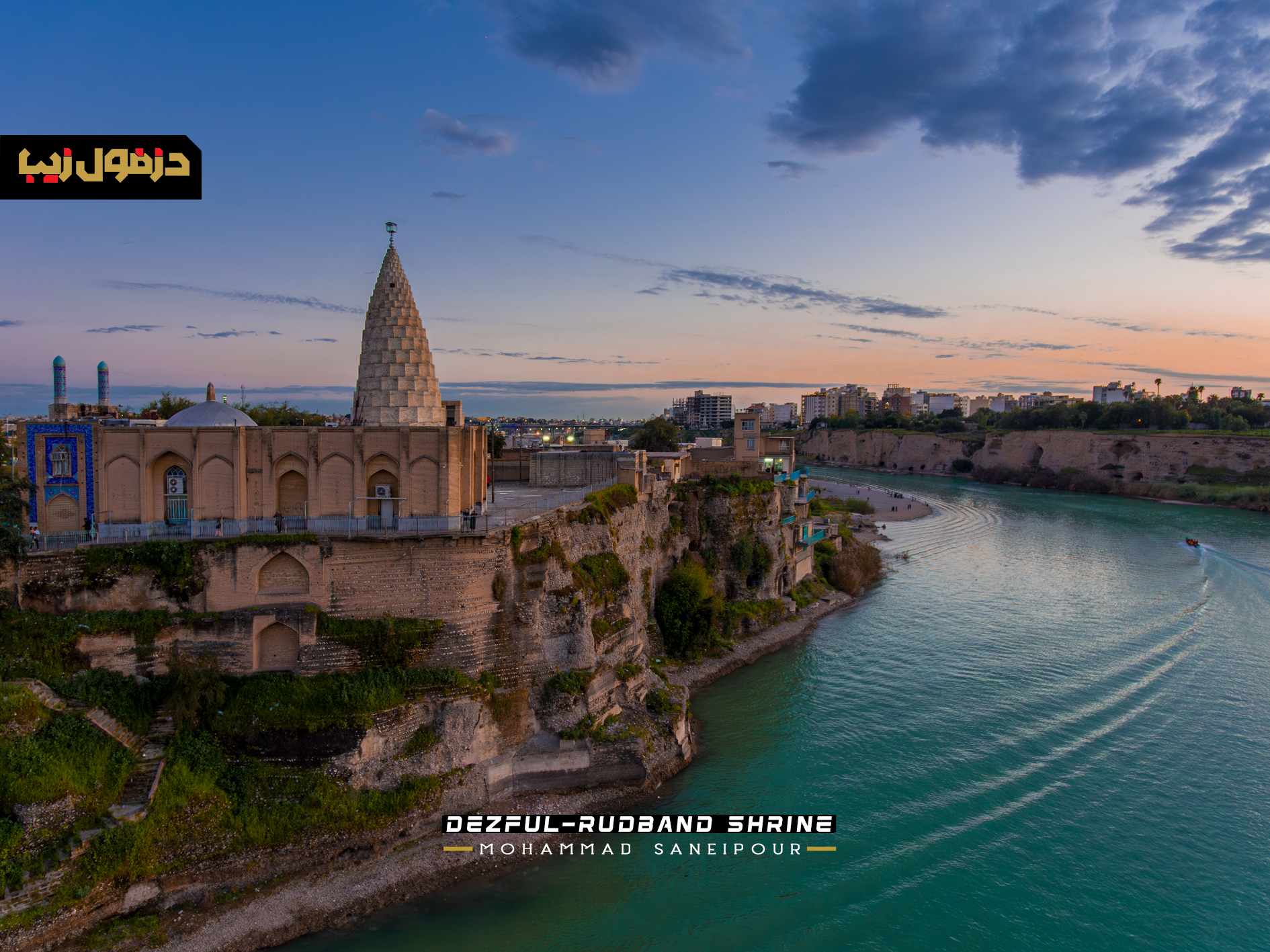
در شمالغربی شهر تاریخی دزفول، بر فراز تپهای مشرف به رود خروشان دز، بنایی آرام و باشکوه خودنمایی میکند؛ بقعهای که قرنهاست با تاریخ، هویت مذهبی و خاطره جمعی مردم این شهر پیوند خورده است. بقعه رودبند، با گنبد سفید و مخروطیشکل خود، نهتنها یکی از شاخصترین بناهای مذهبی دزفول، بلکه یکی از نشانههای ماندگار پیوند میان معماری، طبیعت و فرهنگ بومی این سرزمین است.
این آرامگاه مدفن سید علی صفوی، معروف به سلطانعلی سیاهپوش یا پیر رودبند، از نوادگان شیخ صفیالدین اردبیلی است. بنای اولیه آرامگاه را به دوره تیموری نسبت میدهند که در دوره صفوی، بهویژه روزگار شاهعباس اول، مورد بازسازی قرار گرفته است.
آنچه این مجموعه را از بسیاری از بناهای مذهبی متمایز میکند، موقعیت استقرار آن در ارتفاعی مشرف به رودخانه دز است. از منظر هوایی، بقعه همچون نقطهای مرکزی در میان بافت شهری و فضای سبز پیرامون دیده میشود؛ گنبد سفیدرنگ آن در کنار امتداد رودخانه، درختان کهنسال و چشمانداز طبیعی ساحل، ترکیبی چشمنواز از معماری و طبیعت پدید آورده است.
گنبد مخروطی و پلکانی بقعه با حدود هجده متر ارتفاع و ساختاری بیستترک، از ویژگیهای شاخص معماری آن به شمار میرود؛ فرمی که در معماری مذهبی جنوب ایران، بهویژه مناطق خوزستان و بوشهر، نمونههایی از آن دیده میشود.
The Magnificent Rudband Shrine Overlooking the Dez River
In the northwestern part of the historic city of Dezful, perched atop a hill overlooking the flowing waters of the Dez River, stands a serene and magnificent shrine. For centuries, this sacred site has been deeply connected to the city’s history, religious identity, and collective memory. With its distinctive white, conical dome, the Rudband Shrine is not only one of Dezful’s most prominent religious landmarks but also a lasting symbol of the connection between architecture, nature, and local culture.
The shrine is the burial place of Seyyed Ali Safavi, known as Sultan Ali Siahpoosh or Pir Rudband, a descendant of Sheikh Safi al-Din Ardabili. The original structure is believed to date back to the Timurid period and was later restored during the Safavid era, particularly under the reign of Shah Abbas I.
One of the most remarkable features of the complex is its elevated position overlooking the Dez River. From an aerial perspective, the shrine appears as a focal point amid the surrounding urban landscape and greenery. Its white dome, set against the winding river, mature trees, and natural riverbanks, creates a captivating harmony between architecture and nature.
The shrine’s distinctive conical, tiered dome, approximately 18 meters high and featuring a twenty-faceted structure, is one of its most notable architectural characteristics. This distinctive form can also be found in examples of religious architecture across southern Iran, particularly in the provinces of Khuzestan and Bushehr.