
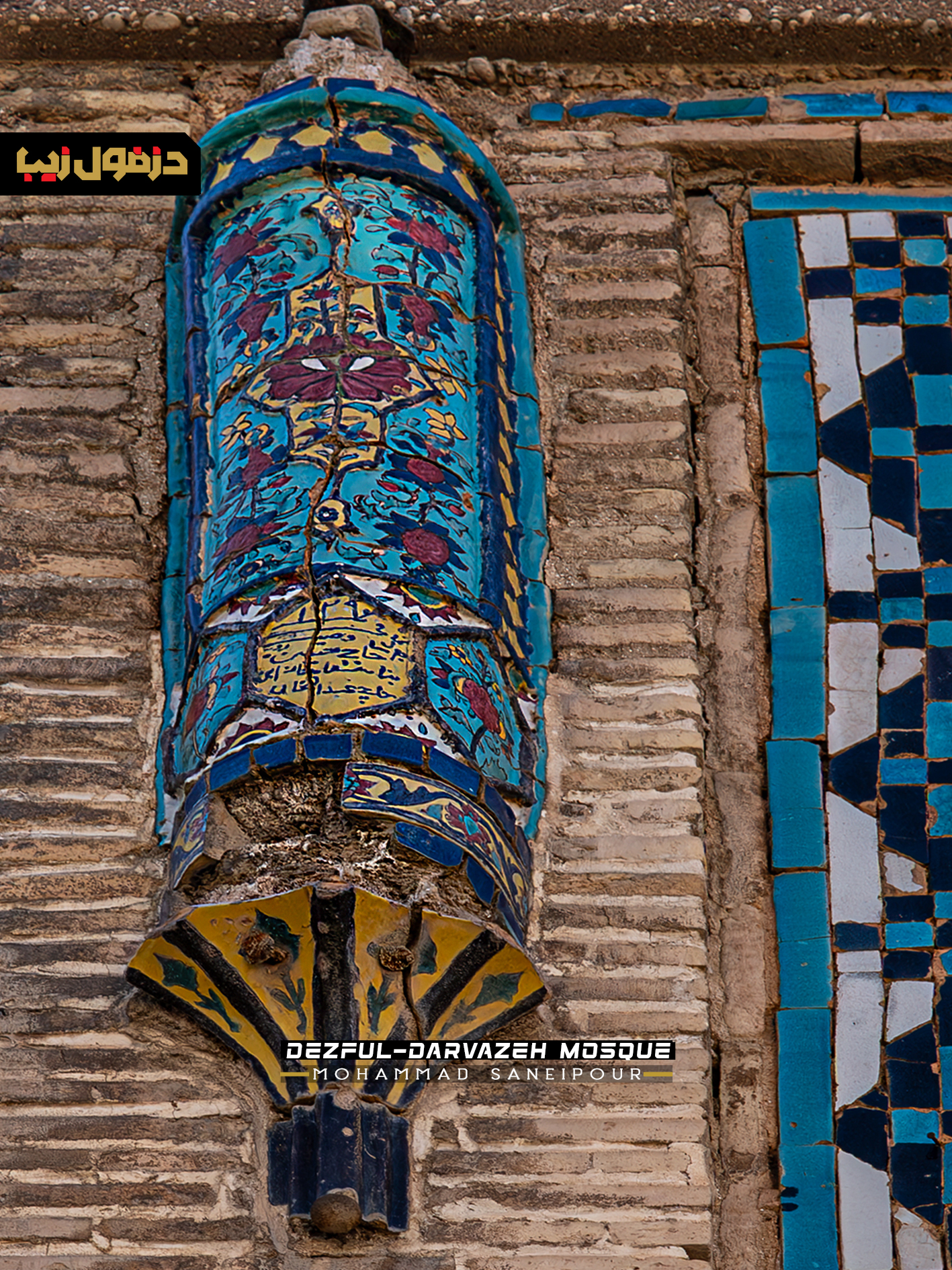
مسجد دروازه دزفول یکی از بناهای تاریخی و مذهبی شهر دزفول در استان خوزستان است. این مسجد در بافت قدیمی شهر، در ضلع غربی خیابان طالقانی و در گذر اصلی محله قلعه و احمد کور قرار دارد. مسجد دروازه از آثار ارزشمند معماری مذهبی دوره قاجار محسوب میشود و به دلیل تزئینات آجری و کاشیکاریهای زیبای خود اهمیت ویژهای دارد. یگان میراث ایران+1
قدمت مسجد دروازه به اواخر دوره قاجار بازمیگردد. بر اساس منابع محلی، این مسجد در سال ۱۸۵۰ میلادی، هنگام حضور موسیو چریکف در دزفول، وجود داشته است؛ بنابراین سابقه آن دستکم به میانه قرن نوزدهم میلادی میرسد.
یکی از مهمترین اسناد مربوط به تاریخ مسجد، کتیبهای با تاریخ ۱۲۹۶ هجری قمری است که به ساخت حوضخانه مسجد اشاره دارد. این تاریخ تقریباً برابر با سال ۱۸۷۹ میلادی است.
مسجد دروازه در تاریخ ۹ اردیبهشت ۱۳۸۲ با شماره ۸۳۸۸ در فهرست آثار ملی ایران به ثبت رسیده است.
یکی از مهمترین ویژگیهای مسجد دروازه، ترکیب هنر آجرکاری سنتی دزفول با کاشیکاری دوره قاجار است.
ویژگیهای معماری و هنری مسجد عبارتاند از:
- آجرهای لعابدار: از عناصر شاخص تزئینی مسجد هستند و جلوه خاصی به نمای بنا میبخشند.
- کاشیکاری هفترنگ: در سردر مسجد به کار رفته و شامل رنگها و نقوش متنوع است.
- کاشیهای زیرلعاب لاجوردی: در تزئینات محراب مسجد دیده میشوند.
- نقوش ختایی و گلاناری: از نقوش گیاهی مهم در تزئینات کاشیکاری بنا هستند.
- گچبری محراب: از دیگر عناصر هنری قابل توجه مسجد است که ویژگیهای هنر دوره قاجار را نشان میدهد.
Darvazeh Mosque
Darvazeh Mosque is one of the historical and religious monuments of Dezful, a city in Khuzestan Province, southwestern Iran. The mosque is located in the western part of Taleghani Street, along the main passage of the Qaleh and Ahmad Kour neighborhoods in the old urban fabric of the city. It is considered a valuable example of Qajar religious architecture and is particularly notable for its decorative brickwork and beautiful tilework.
The history of Darvazeh Mosque dates back to the late Qajar period. According to local sources, the mosque already existed in 1850, during the visit of Monsieur Cherikoff to Dezful. This indicates that the mosque dates back at least to the mid-nineteenth century.
One of the most important historical documents associated with the mosque is an inscription dated 1296 AH, which refers to the construction of the mosque’s water reservoir (Hozkhaneh). This date corresponds approximately to 1879 AD.
Darvazeh Mosque was officially registered as a National Heritage Site of Iran on April 29, 2003, under registration number 8388.
One of the most distinctive features of Darvazeh Mosque is the combination of traditional Dezful brickwork with Qajar-era tile decoration.
The architectural and artistic features of the mosque include:
- Glazed bricks: These are among the mosque’s prominent decorative elements and give the façade its distinctive appearance.
- Seven-color tilework: Used in the entrance portal, featuring a variety of colors and decorative motifs.
- Cobalt-blue underglaze tiles: Found in the decorative elements of the mosque’s mihrab (prayer niche).
- Khatayi and pomegranate-flower motifs: Important floral patterns used in the mosque’s tile decorations.
- Stucco decoration in the mihrab: Another notable artistic feature that reflects the characteristics of Qajar-period decorative art.