
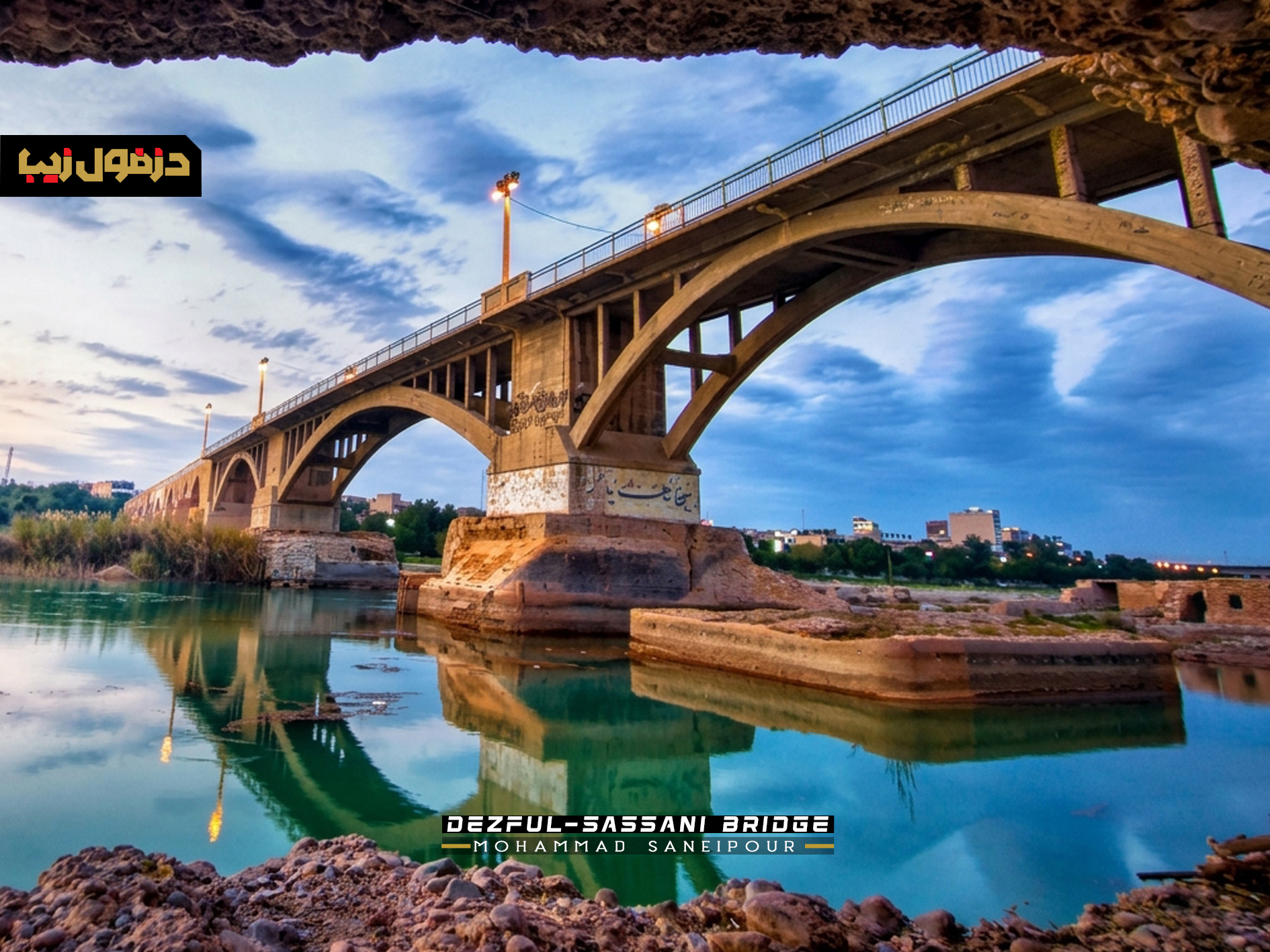
چشمها را که به این قاب بینظیر میدوزیم، تاریخ و طبیعت در هم تنیدهاند تا یکی از باشکوهترین تصاویر سرزمین کهن ایران را به تصویر بکشند. اینجا، از زیر سایهسار صخرههای تاریخی، نگینِ باستانی دزفول، «پل قدیم (ساسانی)»، قامت برافراشته است؛ پلی که بیش از ۱۷ سده (۱۷۰۰ سال) است در برابر خروش تندبادها و جریانهای بیامان روزگار، استوار و سربلند ایستاده و پیونددهنده نسلها بوده است.
این شاهکار مهندسی جهان باستان، یادگاری از دوران پرشکوه ساسانیان است که در حدود سال ۲۶۰ میلادی به دستور شاپور اول ساسانی و پس از پیروزی تاریخی بر امپراتوری روم (در نبرد ادسا و اسارت والرین، امپراتور روم) با استفاده از مهارت اسیران رومی بر روی رودخانه دز بنا شد. این پل تاریخی که به نام «پل رومی» یا «دژپُل» نیز شناخته میشود، در گذشتههای دور نهتنها یک گذرگاه نظامی و استراتژیک، بلکه شاهرگ ارتباطی میان پایتخت فکری جهان باستان یعنی جندیشاپور و سرزمینهای بینالنهرین بوده است. این بنا به قدری در هویت این دیار ریشه دوانده که نام شهر «دزفول» (معرب دژپل) از وجود این دژ و پل تاریخی الهام گرفته شده است.
The Old Bridge: A Gateway of History in the Embrace of the Dez River
When we fix our gaze upon this peerless vista, history and nature appear interwoven to portray one of the most magnificent spectacles of the ancient land of Iran. Here, beneath the sheltering shadows of historic cliffs, the ancient jewel of Dezful, the “Old Bridge” (the Sassanid Bridge), rises with majestic stature—a monument that has stood resilient and proud against the roaring tempests and the relentless torrents of time for over seventeen centuries (1,700 years), serving as an enduring link between generations.
This masterpiece of ancient engineering is a legacy from the glorious Sassanid era, constructed around 260 AD by the order of Shapur I, the Sassanid king. Following his historic victory over the Roman Empire at the Battle of Edessa and the capture of the Roman Emperor Valerian, it was built across the Dez River using the skill of Roman prisoners of war. Known historically as the “Roman Bridge” or “Dezh-Pol” (The Bridge-Fortress), this ancient structure was once not only a strategic military gateway but also a vital artery connecting Gondeshapur—the intellectual capital of the ancient world—with the lands of Mesopotamia. This monumental edifice is so deeply rooted in the identity of this land that the name of the city “Dezful” (the Arabized form of Dezh-Pol) is inspired by the existence of this very fortress and its historic bridge.